January – March: Calving Season & Predator Action
Where to Be: Southern Serengeti (Ndutu Area) & Ngorongoro Conservation Area, Tanzania
What’s Happening:
This period marks the calving season. Massive herds gather on the short-grass plains of the southern Serengeti, where nutrient-rich soils support rapid newborn growth. Over 500,000 wildebeest calves are born within weeks, creating intense predator activity.
Safari Experience:
Outstanding sightings of lions, cheetahs, hyenas, and jackals. The scenery is lush and green, with intimate wildlife moments and dramatic hunts. While this phase unfolds in Tanzania, it sets the stage for the Kenya-bound migration later in the year.
April – May: The Long Rains & Northward Movement
Where to Be: Central and Western Serengeti
What’s Happening:
As the southern plains begin to dry, the herds gradually move north and west through the Serengeti. The Grumeti River becomes an early obstacle, with sporadic and often unpredictable crossings.
Safari Experience:
This is the green season. Landscapes are vibrant, crowds are lighter, and safari rates are generally lower. Afternoon showers are common, but the photographic opportunities are exceptional. Ideal for travelers who value atmosphere and space over guaranteed river drama.
June – July: River Challenges & Arrival in Kenya
Where to Be: Western Serengeti and Northern Migration Corridors
What’s Happening:
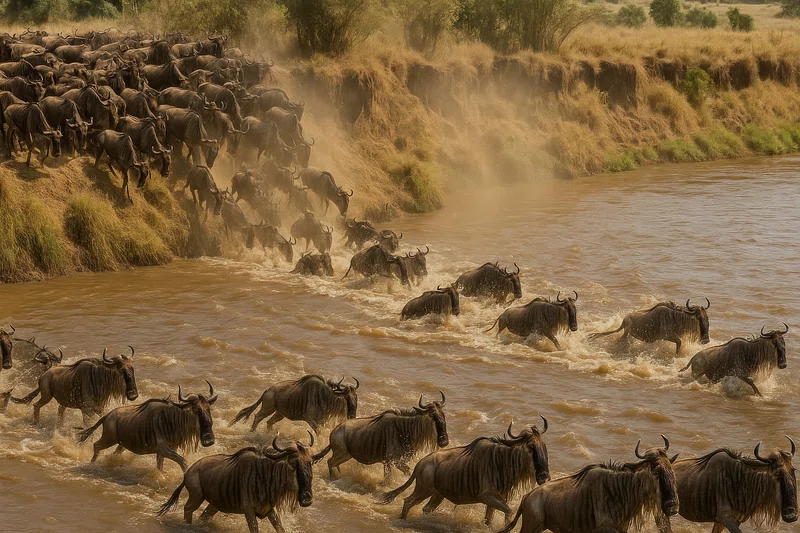
Herds consolidate and push northward. The Grumeti River crossings intensify, with large crocodiles waiting in ambush. By late July, the leading herds cross into Kenya’s Masai Mara, officially launching the migration season there.
Safari Experience:
Anticipation builds. Early July in the Mara can still feel quiet, but momentum increases quickly as the first herds arrive. This transition period offers a fascinating mix of movement and tension.
August – September: Peak Migration in the Masai Mara
Where to Be: Masai Mara National Reserve & Private Conservancies
What’s Happening:
This is the prime time to see the Great Migration in Kenya. The Mara River crossings dominate the landscape, with herds crossing back and forth multiple times, often daily.
Safari Experience:
High drama and unforgettable scenes. Expect dense wildlife concentrations and intense action at the riverbanks. For a more exclusive experience, private conservancies such as Mara North provide fewer vehicles, flexible game drives, and prime positioning—an approach we strongly prioritize at Biggame Trail Adventures.
October: The Gradual Turn South
Where to Be: Masai Mara & Northern Serengeti (Lamai Area)
What’s Happening:
Herds remain in the Mara but become more dispersed. As grazing pressure increases and rainfall patterns shift, they begin crossing back into Tanzania, marking the start of the southward return.
Safari Experience:
Excellent wildlife viewing continues with reduced tourist numbers. October offers an ideal balance between migration activity and a calmer safari atmosphere.
November – December: Return to the Southern Plains
Where to Be: Northern and Central Serengeti
What’s Happening:
Driven by the short rains, the migration moves swiftly south through the Serengeti, heading back toward the fertile calving grounds. The annual cycle completes itself.
Safari Experience:
A transitional yet rewarding period. While major river crossings are rare, the constant movement and refreshed green landscapes create a visually stunning safari.
Pro Tips for Planning Your 2026 Migration Safari
-
Book Early: For travel between July and October, secure lodges and camps 9–12 months in advance.
-
Choose a Conservancy: Private Masai Mara conservancies allow night drives, walking safaris, and fewer vehicles at sightings.
-
Stay Flexible: The migration follows rain, not calendars. Work with operators who provide real-time location updates.
-
Look Beyond the Rivers: Vast plains, predator hunts, and sweeping landscapes are just as powerful as river crossings.